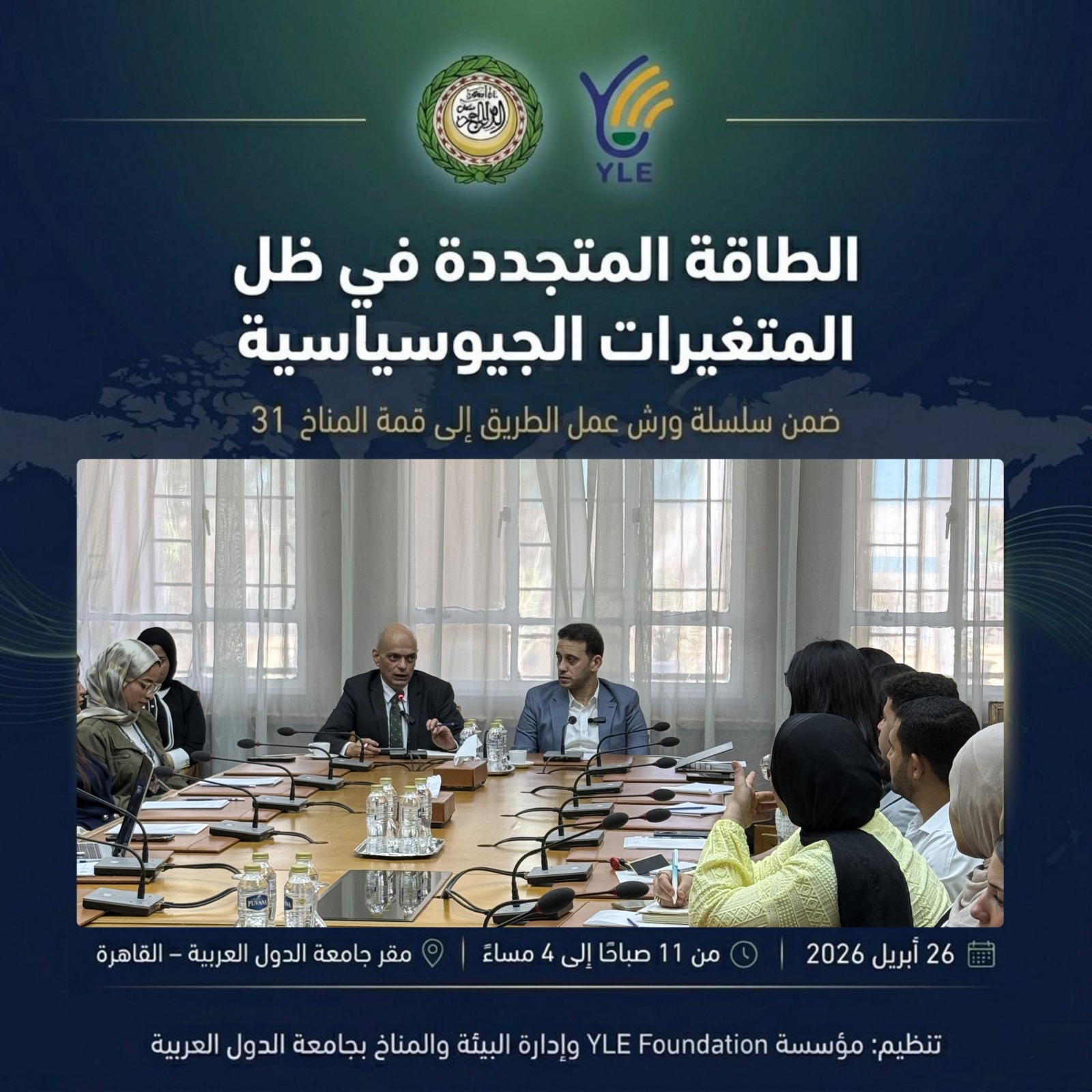
The third workshop in the “Road to COP31” series—jointly organized by YLE Foundation and the League of Arab States—has produced four policy papers and a final communiqué. These outputs will be submitted to the League’s General Secretariat and integrated into the Arab regional preparatory package for COP31.
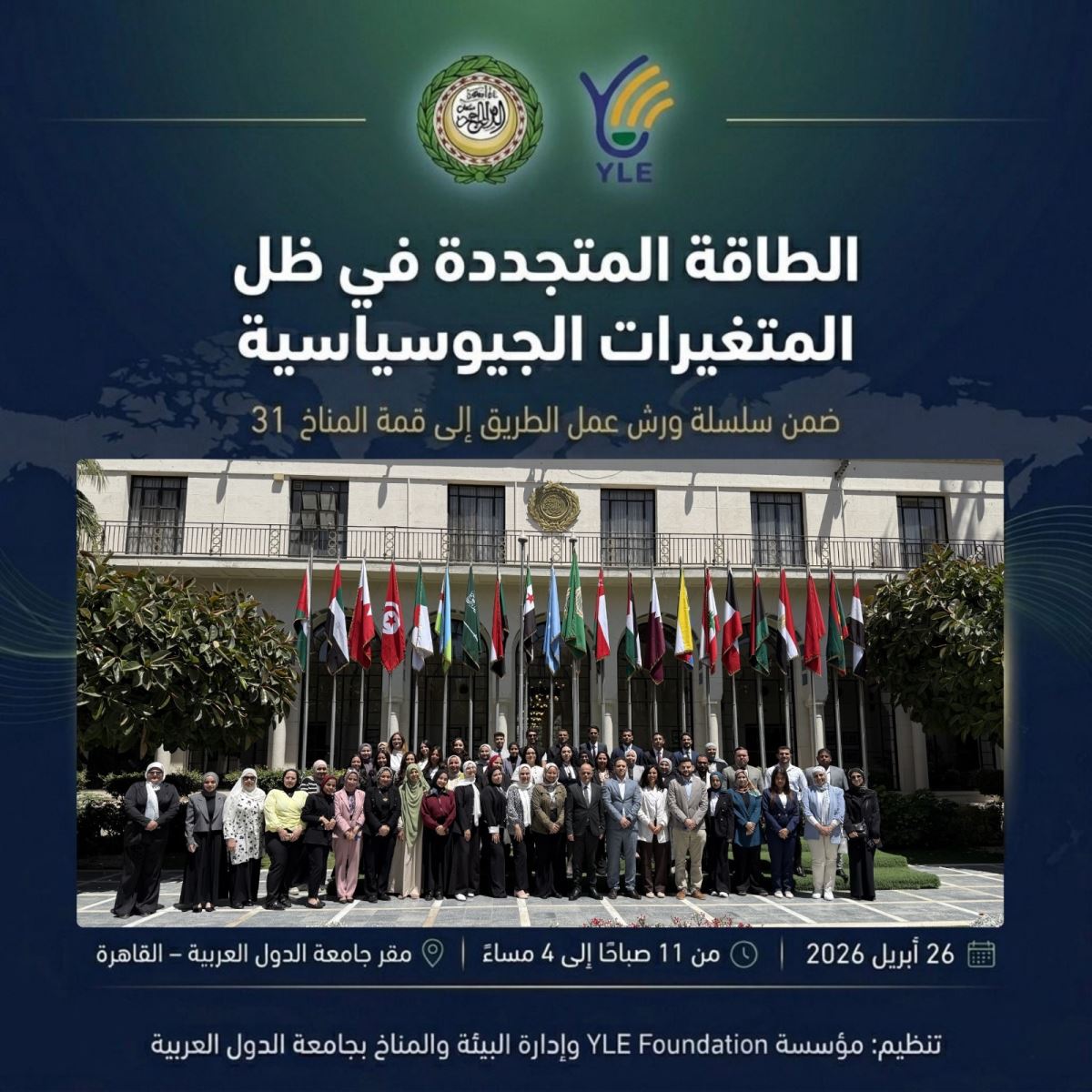
Cairo — Amid accelerating realignments in global energy markets, dozens of young experts, researchers, civil society leaders, and renewable energy specialists from across the Arab region convened on Sunday, April 26, at the headquarters of the League of Arab States in Cairo. The aim was to formulate a coherent regional position on the energy transition ahead of the 31st United Nations Climate Change Conference (COP31).
The workshop, titled “Renewable Energy in the Context of Geopolitical Shifts: Towards a Coherent Arab Position Ahead of COP31,” was jointly organized by YLE Foundation and the Environment and Climate Department of the League of Arab States. It marks the third milestone in an extended preparatory track that will culminate in the publication of a comprehensive policy book to be delivered to Arab negotiators ahead of the climate summit.
The workshop produced four specialized policy papers, each including prioritized recommendation matrices, alongside a joint final communiqué. These outputs will be formally submitted to the General Secretariat of the League of Arab States for inclusion in the Arab regional preparatory package for COP31.
A Unified Arab Voice
Global energy markets are undergoing restructuring around new strategic alliances, supply chain pressures, and an unprecedented acceleration in renewable energy deployment. For Arab countries—whose economies, foreign policies, and development pathways are closely tied to the energy sector—the question is no longer whether to engage in the energy transition, but under what conditions and through which institutional frameworks. The workshop aimed to translate this strategic question into actionable policy guidance.
In his opening remarks, Mr. Ahmed Fathy, Chairman of YLE Foundation, emphasized that this effort represents a deliberate institutional intervention:
“The Arab region cannot afford to arrive at COP31 with a fragmented voice on the energy transition. Our task today is not to reiterate general principles, but to identify specific legislative, regulatory, and implementation gaps—where Arab positions can either converge into meaningful negotiating weight or dissipate into isolated national tracks.”
Dr. Mahmoud Fathallah, Director of the Environment and Climate Department at the League of Arab States, highlighted the workshop’s multi-sectoral nature:
“Preparing for climate conferences requires a comprehensive societal approach. Legal experts, researchers, policymakers, and economists must sit at the same table. The renewable energy file is highly complex, and civil society organizations must engage with this complexity if their advocacy messages are to align with the strategic interests of Arab states.”
Three Working Sessions, Four Policy Papers
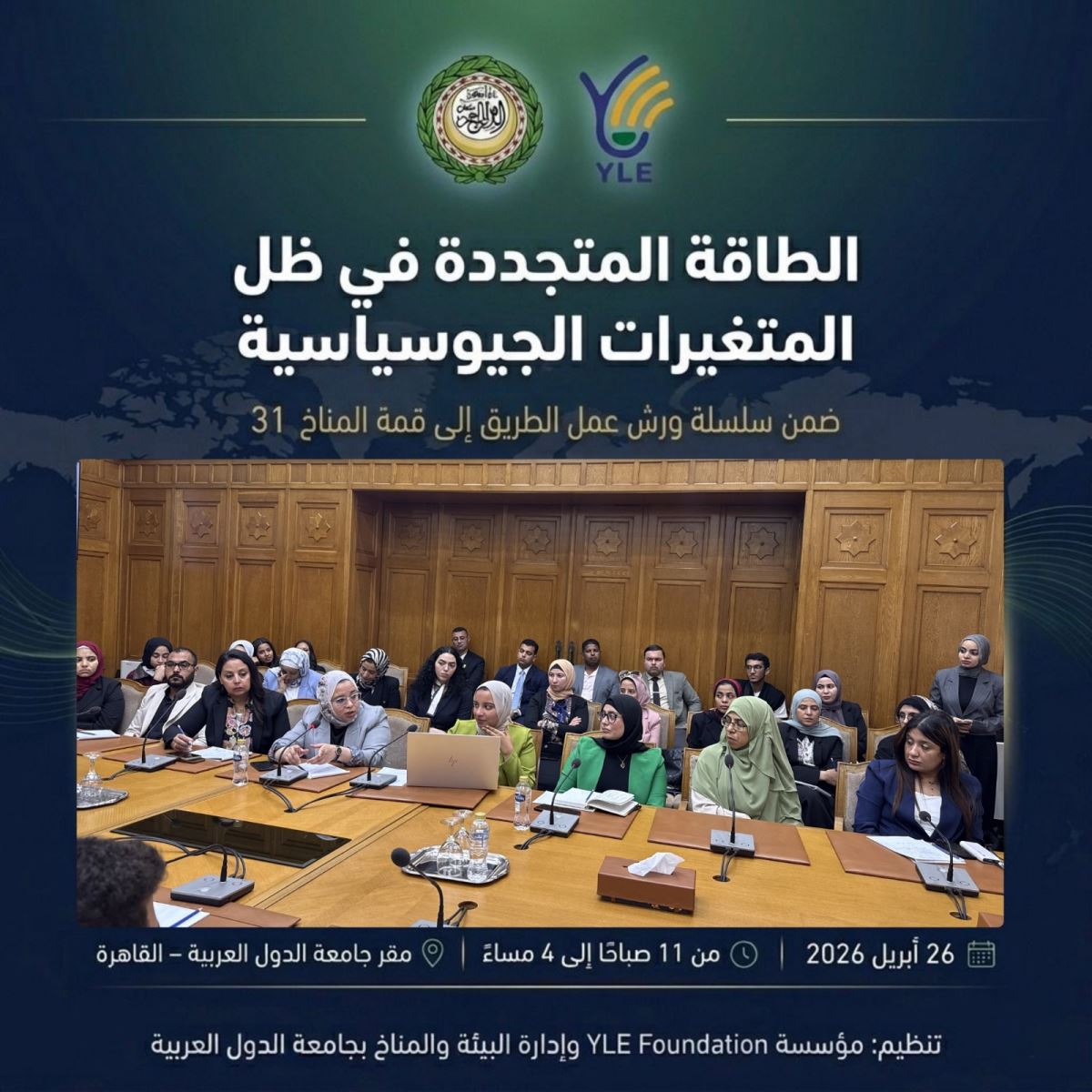
The first session, moderated by Mr. Fathy, addressed the often-overlooked nexus between renewable energy expansion and biodiversity protection—an intersection increasingly evident in wind corridors along the Red Sea coast and solar deployment zones across the region. Participants drew on field observations to highlight gaps not currently addressed by existing regulatory frameworks.
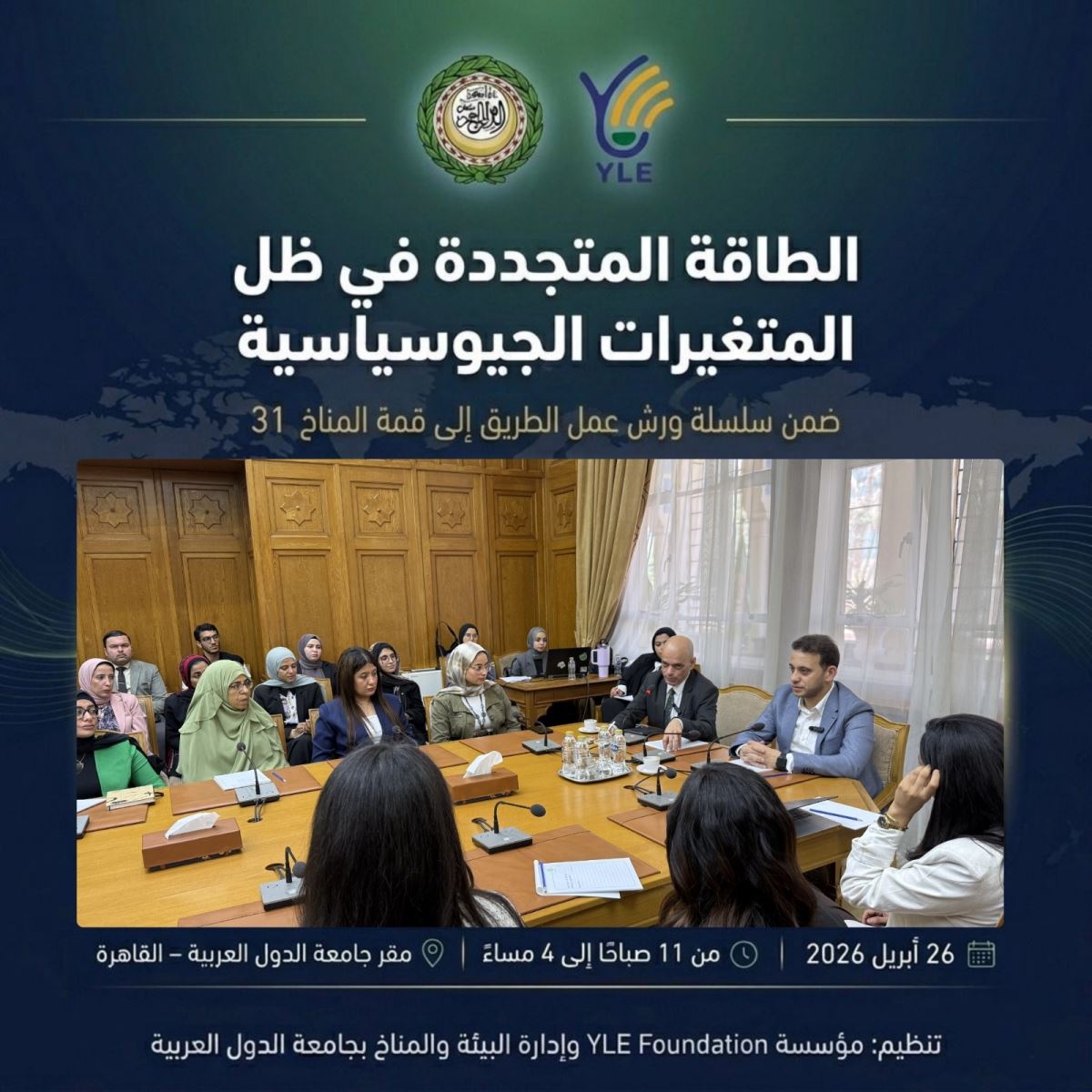
The following two sessions, led by Eng. Karim Ehab and Eng. Sohaila Nasser, were designed as output-oriented dialogues. Participants mapped local legislative, regulatory, and implementation gaps, and collaboratively developed initial policy responses. Throughout these discussions, both experts—drawing on their specialization in renewable energy—assessed the technical feasibility of proposed solutions and their alignment with both Egyptian and broader Arab contexts.
What Comes Next
The four policy papers will be further refined and presented to high-level officials, members of parliament, and leaders from major private sector companies in the next workshop of the series.
Mr. Fathy noted:
“Today marks the starting point for the next milestone on the road to COP31. What we produce in the coming months must be precise enough to be actionable, and credible enough to be defended at the negotiating table.”
About the “Road to COP31” Series
“Road to COP31” is a regional preparatory track jointly organized by YLE Foundation and the Environment and Climate Department at the League of Arab States. The series brings together Arab youth, academics, civil society experts, and technical specialists through a sequence of thematic workshops. The cumulative outputs will be compiled into a regional policy book to inform Arab participation in COP31 negotiations.