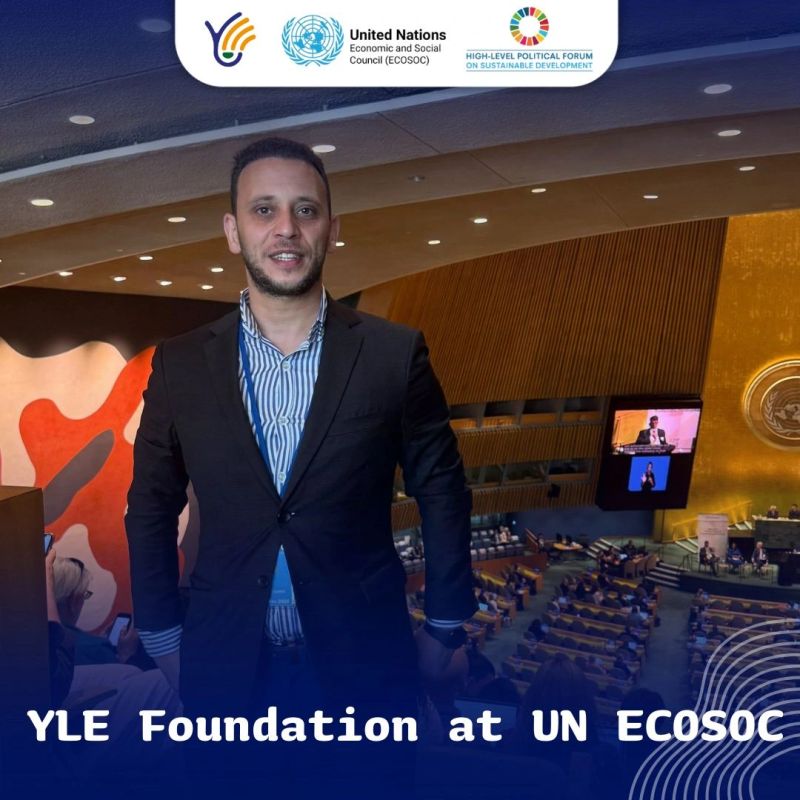
New York – At a critical juncture in humanity's journey toward a sustainable future, the High-Level Political Forum (HLPF) 2025 convened at the United Nations Headquarters in New York, carrying with it a growing sense of urgency and a mix of hope and concern.
This forum came at a pivotal moment — marking the 10th anniversary of the adoption of the 2030 Agenda for Sustainable Development, with just five years remaining until the target deadline.
Under the theme: “Reinforcing the 2030 Agenda and its SDGs for current and future generations through sustainable, inclusive, and evidence-based solutions”, the Forum sought to deliver an honest assessment of progress, identify persistent challenges, and chart a clear path forward to accelerate global efforts.
A Snapshot of the Current Situation
The opening message, echoed throughout the halls of the UN, was both clear and alarming:
The world is not on track to achieve the Sustainable Development Goals (SDGs) by 2030.
The progress report presented by the UN Secretary-General revealed deeply concerning statistics:
- Only 35% of SDG targets are showing moderate progress
- 47% are experiencing insufficient progress
- 18% are actually regressing
These shocking numbers indicate that the world is losing hard-won gains in critical areas. In total, 65% of the targets are off-track, demanding a radical shift in our current approach.
The discussions identified several key obstacles hindering progress, including:
- Geopolitical conflicts draining resources and destroying infrastructure
- Massive funding gaps estimated at trillions of dollars annually
- Worsening effects of climate change
- Widening inequalities both within and between countries
In-Depth Review of Key Goals
The Forum focused particularly on an in-depth review of four vital SDGs, in addition to the annually reviewed Goal 17 on partnerships:
Goal 3 – Good Health and Well-being
While progress was recognized in areas such as expanded access to basic healthcare and reduced child mortality, the COVID-19 pandemic exposed systemic weaknesses, resulting in a global decline in life expectancy.
Health financing emerged as a major challenge, with calls for innovative funding mechanisms and increased investment in research and development — particularly for diseases that disproportionately affect developing countries.
Goal 5 – Gender Equality
Despite some advancements, women and girls continue to face immense barriers to education, employment, and political participation.
Discussions highlighted troubling setbacks in sexual and reproductive health policies, the persistence of gender-based violence, and the lack of recognition for unpaid care work.
There were strong calls to invest in girls’ education, the care economy, and measures to improve women’s access to finance and digital technologies.
Goal 8 – Decent Work and Economic Growth
Described as one of the most off-track goals, with the International Labour Organization citing financial, environmental, and structural economic shocks as key reasons for stagnation.
Extensive discussions centered on the need to expand employment opportunities, improve labor rights, address heat stress in workplaces, and facilitate the transition from informal to formal economies.
Goal 14 – Life Below Water
Identified as the least funded goal, despite the critical importance of oceans for human and planetary well-being.
Major threats were emphasized, including plastic pollution, ocean acidification, and overfishing.
Youth and civil society groups called for increased ambition in marine protection, including expanding marine protected areas.
Goal Interlinkages: The Key to Integrated Solutions
The interconnectedness of the SDGs was a recurring theme throughout the Forum.
Delegates repeatedly stressed that progress in one goal is dependent on progress in others.
For instance:
- Good health (Goal 3) is not achievable without ending poverty (Goal 1) and ensuring quality education (Goal 4)
- Empowering women (Goal 5) is a foundational driver of progress across almost all other goals
This recognition of the integrated nature of the goals reinforces the need for holistic and cross-sectoral approaches that move beyond siloed interventions.
Key Challenges and Opportunities
Several overarching issues emerged as focal points of debate and contention:
• Financing for Development
The funding gap remains a major challenge.
Despite commitments made at the Fourth International Conference on Financing for Development (FfD4), many speakers expressed frustration at the lack of decisive actions to close the financing gap.
Discussions emphasized the urgent need to reform the global financial system, alleviate debt burdens, and develop innovative funding mechanisms.
• Science, Technology, and Innovation (STI)
The Forum acknowledged the critical role of STI in accelerating progress.
However, concerns were raised about ensuring that innovation is inclusive and equitable.
Delegates emphasized the importance of bridging the digital divide and integrating local and traditional knowledge with advanced scientific research to ensure context-appropriate solutions.
• Sensitive and Divisive Issues
Diverging views emerged on sensitive topics.
For instance, terms related to gender identity sparked debate, with civil society groups calling for the recognition of human rights for all genders, while some countries opposed the use of the term “gender” altogether.
There was also disagreement over the role of private investment, with some criticizing it for contributing to human rights violations, while others saw it as essential to bridging financing gaps.
Voluntary National Reviews (VNRs): A Window into Local Action
36 countries, including those facing unique challenges such as conflict and climate extremes, presented their Voluntary National Reviews (VNRs).
These presentations illustrated how global goals are being translated into national policies and local action.
Examples:
- Guatemala reported progress in reducing maternal mortality
- Sudan presented a powerful reflection on how conflict is reversing hard-won development gains
The reviews underscored the importance of:
- Strong institutional frameworks
- Inclusive approaches that involve all stakeholders
- Investment in data systems to track progress
Recommendations and Future Steps
From these discussions, several key recommendations emerged:
- Reform the Global Financial System
– Make it more inclusive and equitable
– Improve access to finance for developing countries
– Offer innovative solutions to debt crises - Invest in People and Science
– Scale up funding for STI
– Ensure equitable access to technology and knowledge
– Support education, skills training, and the care economy to tackle inequalities - Adopt Inclusive Policies
– Address root causes of inequality
– Strengthen worker protections
– Promote social dialogue - Empower Local Action
– Equip local governments and communities with the tools and resources they need to implement sustainable development projects tailored to their own needs
Conclusion
The High-Level Political Forum 2025 served as a wake-up call for the world.
The message is clear: Time is running out, and current efforts are not sufficient.
However, the Forum was also a rallying point for collective action and a reminder that solutions are within reach — if there is political will, genuine partnerships, and an unwavering commitment to leaving no one behind.
The months and years ahead will be critical in determining whether the world rises to the challenge and turns the promise of 2030 into a reality for all.
wrote by: Rawda Abu Bakr Mahrous