1. General Context and Opening
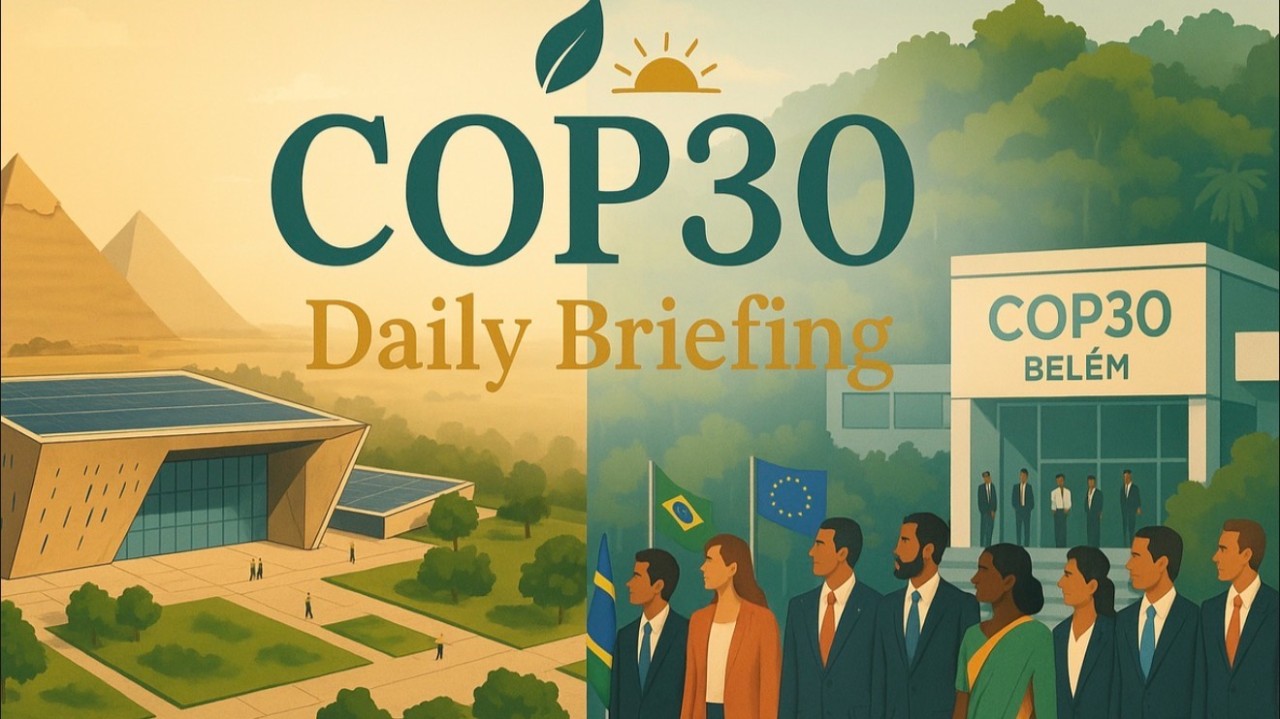
The 30th session of the Conference of the Parties (COP30) to the UNFCCC commenced in Belém, Brazil, in the heart of the Amazon rainforest, with broad participation exceeding 50,000 attendees from over 190 countries. The conference holds symbolic significance as the first of its kind to be held in the Amazon region, highlighting the vital role of forest ecosystems in global climate action. The opening took place against a critical scientific backdrop, with the Intergovernmental Panel on Climate Change (IPCC) warning that 2024 was the warmest year on record, with average temperatures reaching 1.55°C above pre-industrial levels, and that the current trajectory of Nationally Determined Contributions (NDCs) still leads the world towards a catastrophic warming of 2.3-2.5°C by the end of the century.
2. Key Messages from the Opening Plenary
The opening remarks emphasized the urgent need to accelerate the pace of climate action and shift from pledges to actual implementation. Brazilian President Luiz Inácio Lula da Silva stressed that this must be the “Implementation COP,” calling for a revival of the momentum from the 1992 Rio Summit and comparing the USD 1.3 trillion needed to address the climate crisis with the over USD 2.7 trillion in annual global military spending. COP30 President André Corrêa do Lago noted that the conference will be one of “implementation, adaptation, and integration” between climate policy and economic development. In turn, UNFCCC Executive Secretary Simon Stiell urged countries to agree on concrete steps for a just and orderly transition away from fossil fuels, while COP29 President Mukhtar Babayev recalled that the Paris Agreement is now entering its first full implementation cycle after the completion of its rulebook and the definition of the New Collective Quantified Goal on climate finance (NCQG) in Baku.
3. Procedural Matters and Agenda Adoption
The first day saw a notable procedural success, as the Brazilian Presidency, through intensive pre-sessional consultations, secured a swift agreement on the agendas for the main bodies (COP, CMA, CMP, SBs). It was agreed not to include the eight contentious items proposed by various groups and countries on the formal agendas. Instead, they will be addressed in four main Presidency-led consultations, open to observers, focusing on: the implementation of Paris Agreement Article 9.1 (developed countries’ finance provision obligation), unilateral trade measures, the ambition and implementation gap, and the synthesis of biennial transparency reports (BTRs). Several items were also deferred to future sessions, most notably long-term finance and the periodic review of the long-term global goal (to COP31), allowing substantive negotiations to begin without delay.
4. Key Disputes and Negotiating Bloc Positions
The traditional divides between developed and developing countries were clearly visible during the first Presidency consultations, which lasted for four hours. The disagreements centered on key issues summarized in the following table:
Climate Finance (Article 9)
Developing Countries (African Group, Arab Group, LMDCs): Demand a focus exclusively on Article 9.1 as a legal obligation for developed countries and call for a clear action plan for its delivery.Developed Countries (Japan, UK, EIG, Norway): Prefer to discuss Article 9 as a whole, emphasizing the importance of a wide variety of funding sources and voluntary contributions (Articles 9.2 and 9.3).
Ambition Gap (NDCs)
Small Island States (AOSIS) & UK: Call for accelerating implementation to close the current gap without altering the goals of the Paris Agreement.Other groups: Expressed concern that this discussion might conflict with the established “Paris cycle.”
Unilateral Trade Measures (UTMs)
Developing Countries (LMDCs, Arab Group): Argue that these measures, such as the Carbon Border Adjustment Mechanism (CBAM), penalize their economies and hinder their ability to take climate action, demanding a formal discussion.Developed Countries (EU, Japan): Believe these issues are more appropriately handled at the World Trade Organization (WTO) to avoid duplication.
5. Engagement of Local Communities and Indigenous Peoples
The Presidency convened a thematic workshop on further engaging local communities in the UNFCCC process. Brazil’s Minister of Racial Equality, Anielle Francisco da Silva, delivered a powerful speech emphasizing the importance of addressing racism within institutions and noting that local communities can provide vital solutions to the climate crisis. Proposals discussed included adding representatives of local communities to the Facilitative Working Group of the Local Communities and Indigenous Peoples Platform (LCIPP), creating a separate funding window for them in adaptation initiatives, and facilitating their direct access to global climate funds like the Green Climate Fund (GCF).
6. Dialogue on Article 6 Mechanisms (Carbon Markets)
Day one hosted the second dialogue on ambition in the context of Article 6.2 (cooperative approaches). Views on the role of this mechanism varied. AOSIS called for it to be used to “top up” NDC ambition rather than replace domestic action, while environmental NGOs warned of plans by some parties to “misuse Article 6 as a flexibility mechanism instead of an ambition mechanism.” Other parties, like Australia, confirmed they would rely exclusively on domestic measures to meet their 2035 targets, whereas the EU indicated a potential use of Article 6 to achieve its 2040 target.
7. In the Corridors
Despite the procedural success, the first day was not without logistical challenges. Observers noted that many participants had to endure long daily commutes due to a lack of adequate accommodation options in Belém. A heavy tropical thunderstorm in the afternoon also led to water leaking into the main plenary hall, creating symbolic “waterfalls.” Nevertheless, these disruptions did not deter delegates, who showed a clear determination to finalize the organization of work and begin substantive negotiations as soon as possible, in a testament to what President Lula described as “sufficient political will.”