Cairo, May 18, 2026
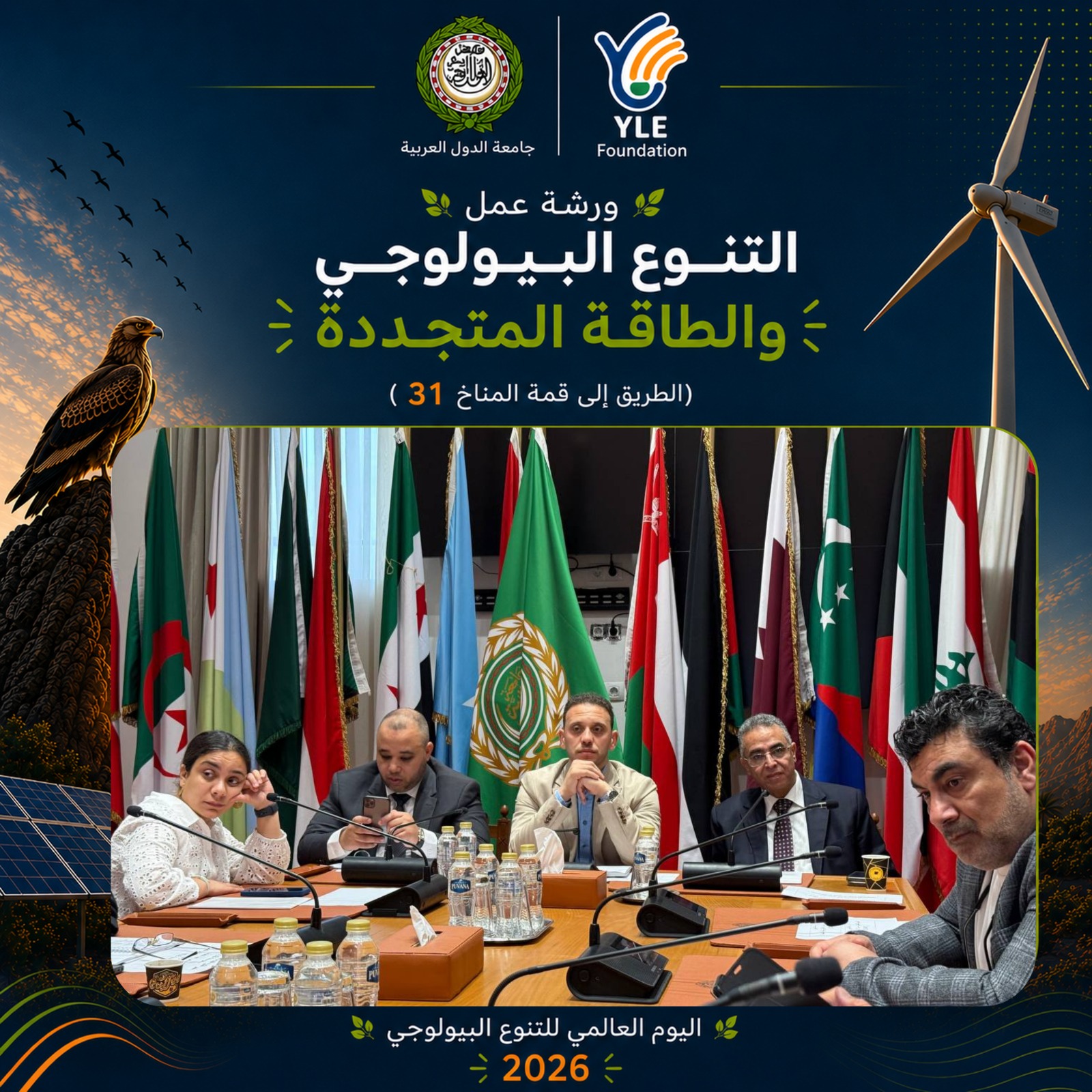
The YLE Foundation – holding special consultative status with the United Nations Economic and Social Council (ECOSOC), observer status with the United Nations Framework Convention on Climate Change (UNFCCC) and the United Nations Convention to Combat Desertification (UNCCD), institutional membership in the United Nations Environment Programme (UNEP), and observer status under the Barcelona Convention – concluded the high‑level regional workshop "Biodiversity and Renewable Energy on the Road to COP31," organized in partnership with the Environment & Climate and Energy Departments of the League of Arab States on May 17 and 18, 2026, at the headquarters of the League's General Secretariat in Cairo.
The workshop was the fourth and final installment of the "Road to COP31" series launched by the YLE Foundation in February 2026 as a regional platform for political and technical dialogue on climate, energy, biodiversity, and environmental governance in the Arab region.
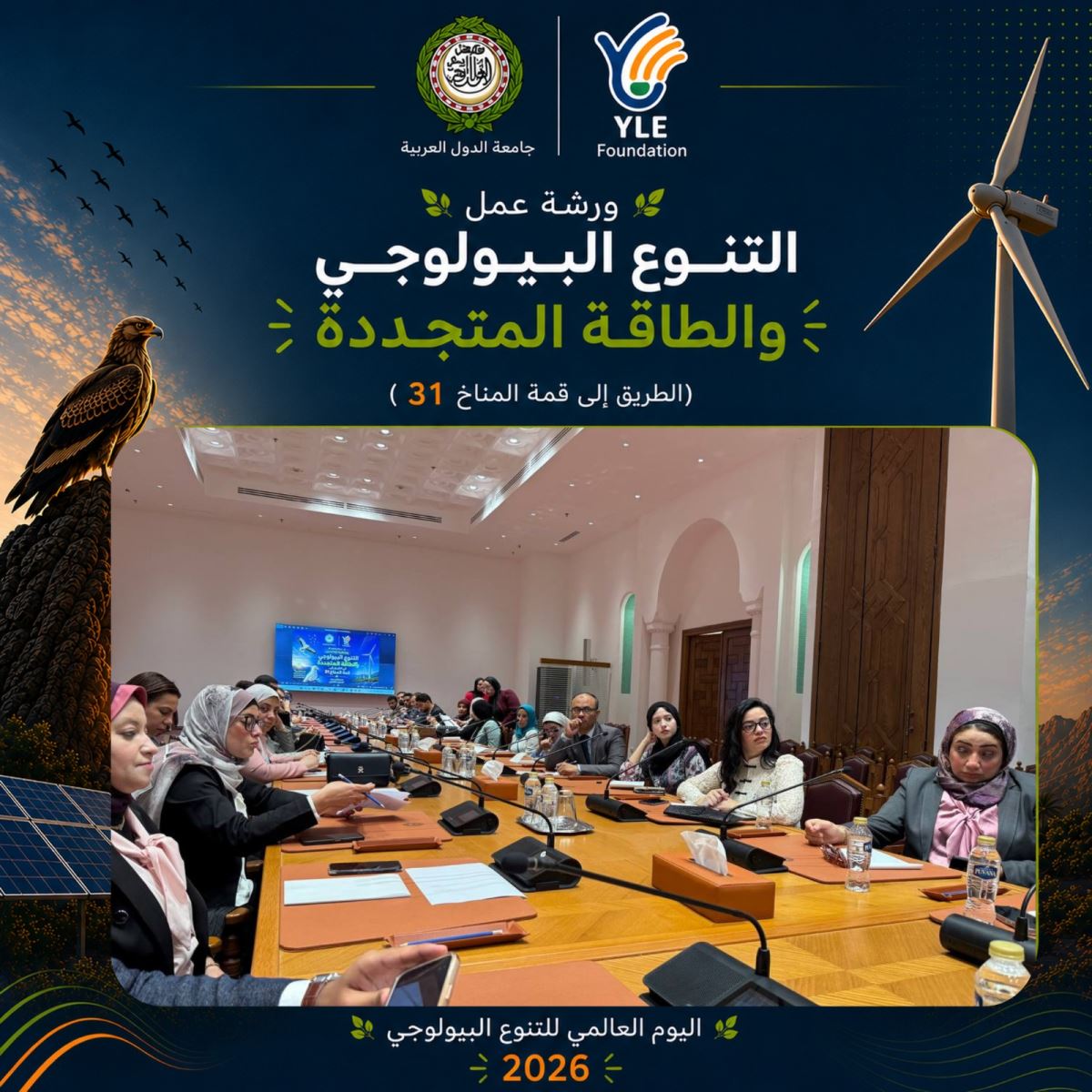
The workshop saw the participation of 133 participants over two days, with 81 participants on the first day and 52 on the second. Attendees included representatives of civil society organizations, universities, research centers, policy and study centers, renewable energy companies, biodiversity experts, government entities, as well as a broad presence of youth, researchers, and individuals interested in environmental and energy issues.
The workshop also featured contributions from a number of regional and international institutions, including the International Renewable Energy Agency (IRENA), the Regional Center for Renewable Energy and Energy Efficiency (RCREEE), Egyptian environmental and energy institutions, delegates from the Ministry of Environment and the Ministry of Electricity and Renewable Energy, in addition to experts and specialists in renewable energy, migratory bird protection, and environmental safeguards.
Among the workshop’s key outcomes:
- Contributing to the formulation of a more unified Arab position linking the expansion of renewable energy with biodiversity protection requirements under the Kunming‑Montreal Global Framework, in preparation for inclusion in the Arab preparatory track for the COP31 climate summit.
- Identifying a number of legislative, regulatory, and operational gaps related to the application of environmental safeguards on renewable energy projects in the Arab region.
- Official announcement of the launch of the first center for rescuing and rehabilitating migratory birds in the Red Sea region in the city of Ras Gharib, located in one of the world’s most important bird migration corridors, and only 8–15 km from the largest concentration of wind turbines in Africa.
- Advancing the integration of the concept of a "nature‑positive energy transition" into regional energy discussions and policies.
- Expanding the participation of youth, academics, and researchers in dialogues on climate, biodiversity, and energy in the Arab region.
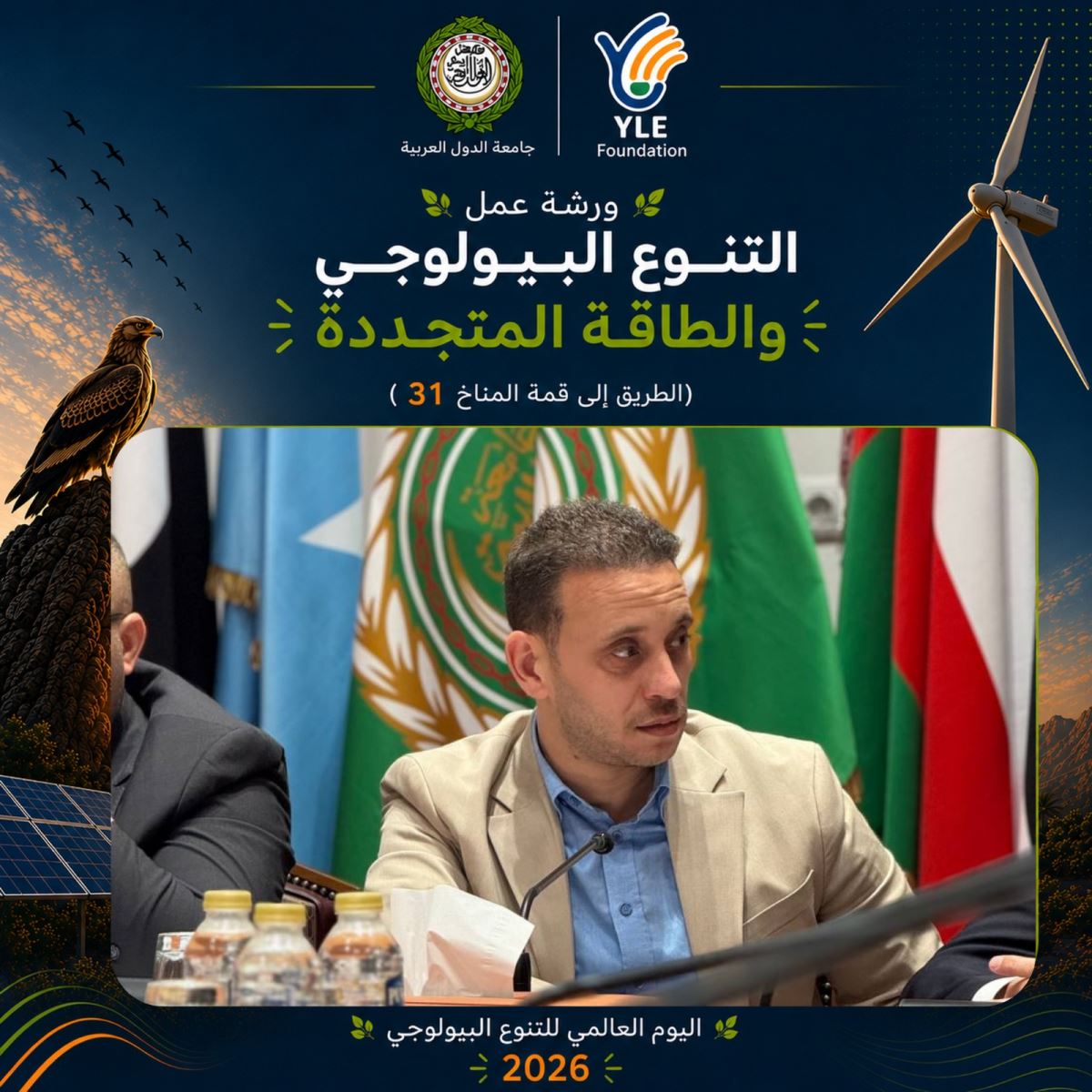
Ahmed Fathi, Executive Director of the YLE Foundation, chaired the high‑level session, which addressed two strategic questions: How do current geopolitical shifts affect the trajectory of renewable energy in the Arab region? And how can renewable energy be expanded while preserving biodiversity, natural habitats, and migratory bird flyways?
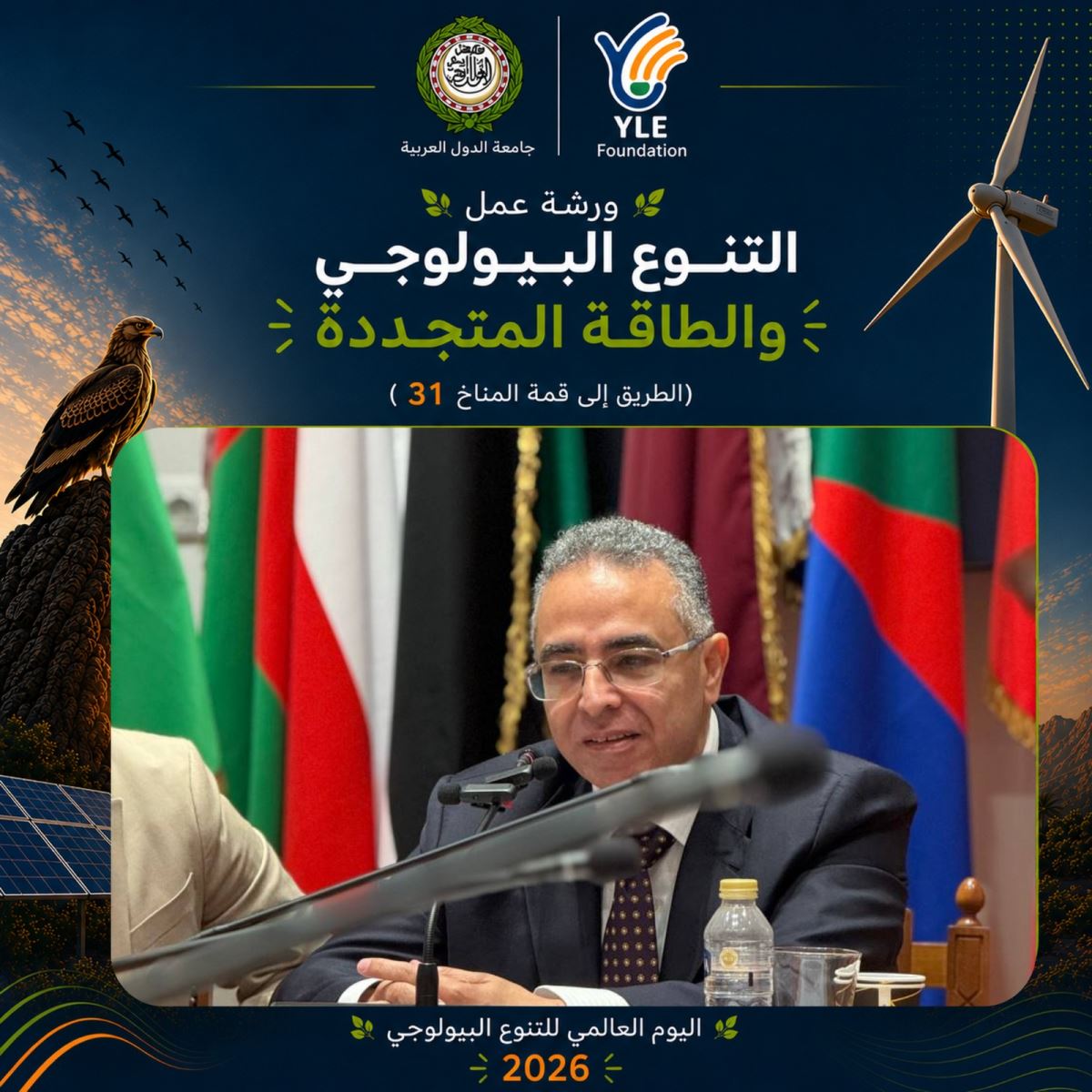
During the session, Dr. Ahmed Badr, representative of the International Renewable Energy Agency (IRENA), highlighted the growing operational and geopolitical challenges facing the energy transition in the region, particularly with respect to energy security and storage challenges, and the importance of integrating environmental considerations into renewable energy systems more effectively.
The second day featured two technical sessions facilitated by Eng. Mohamed Cherouali, Energy and Environment Expert at the Regional Center for Renewable Energy and Energy Efficiency (RCREEE).
The first session discussed the Active Turbine Management Programme in the Gulf of Suez region – a globally pioneering model that uses radar and temporary turbine shutdowns to reduce migratory bird mortality without significant energy production losses. Participants in this discussion included Dr. Tamer Kamal El‑Din (General Director of the Nature Protection Sector, Egyptian Environmental Affairs Agency), Ayman Fayek (Executive Director of Business Development, ACWA Power), Mr. Adham Rifai, and Mr. Ahmed Fathi, Executive Director of the YLE Foundation.
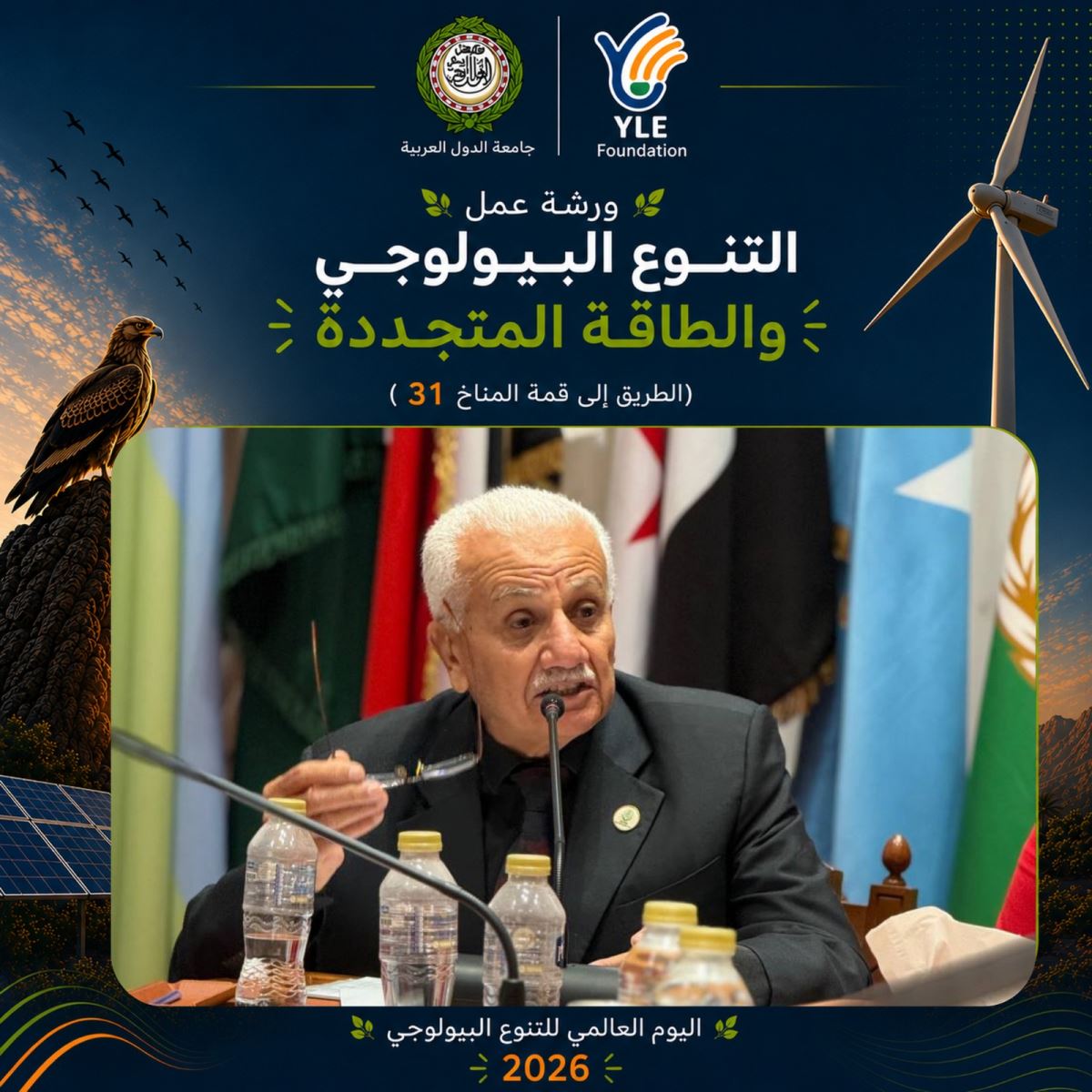
The second session addressed the relationship between wind farms and the habitat of the "Egyptian Mastigure" (spiny‑tailed lizard), a threatened desert species in the Gulf of Suez region. Mitigation measures, environmental impact assessments, and coexistence opportunities were reviewed. Participants in this session included Eng. Mohamed Cherouali as rapporteur, along with Ms. Eman Ramadan, Dr. Rasha El‑Sherbiny, Dr. Tamer Kamal El‑Din (General Director of the Nature Protection Sector, EEAA), Mr. Ahmed Fathi, as well as representatives from ACWA Power, SafeSoar, the Egyptian Environmental Affairs Agency (EEAA), and RCREEE.
Ahmed Fathi, Executive Director of the YLE Foundation, stated that what they announce today is not merely a bird rescue center, but a practical model demonstrating that the true energy transition is measured not only by renewable energy capacities, but also by their ability to protect the ecosystems upon which this transition is built.